

Ever wondered how a tiny leaf can reveal the identity and family tree of a grape variety? Here's how grapevine DNA profiling works—from collecting a leaf in the vineyard to finding a match in a DNA database, without the scientific jargon.
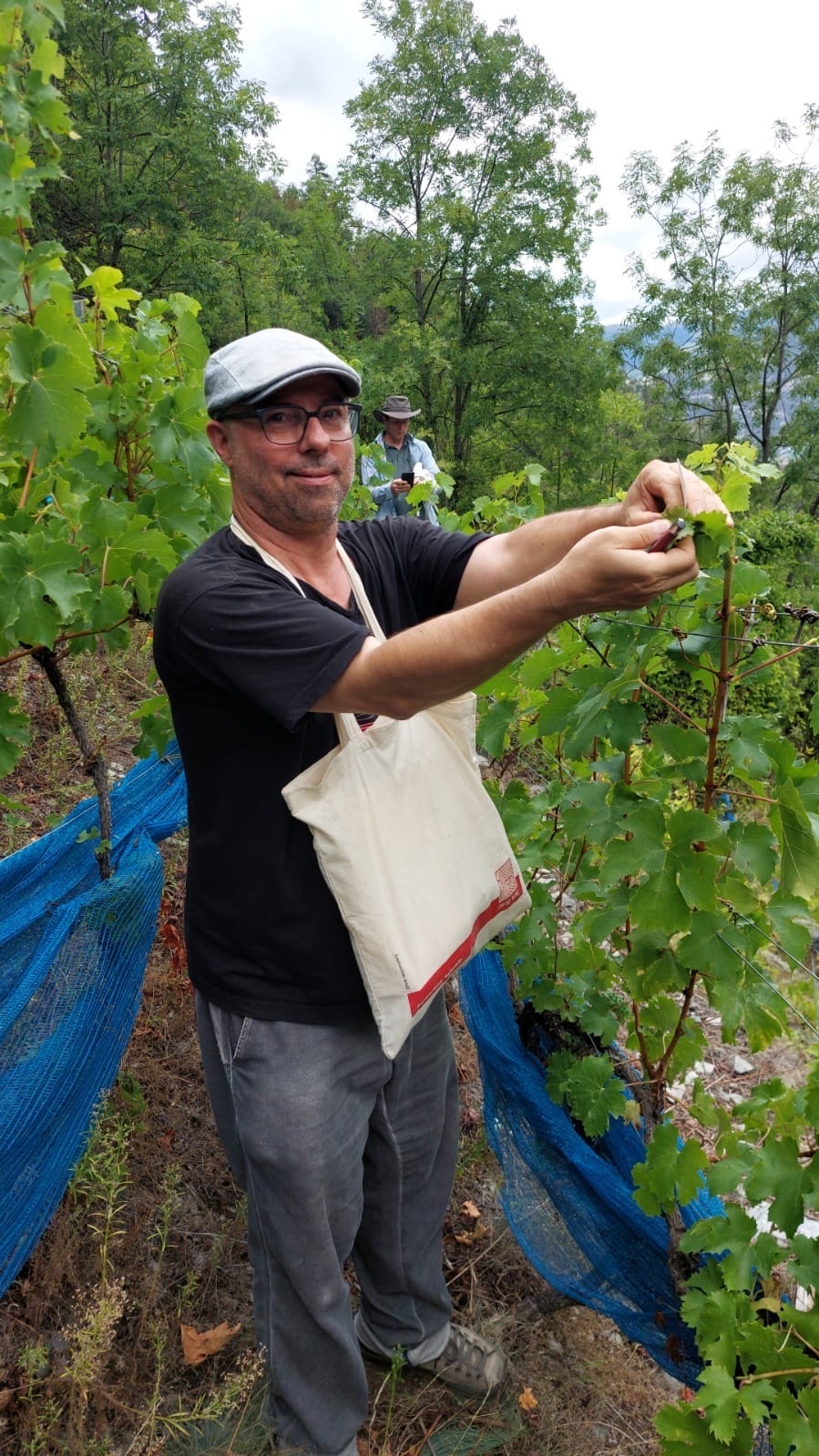
To collect a grapevine sample for DNA analysis, I could use almost any living part of the plant, except the seeds, as they already belong to the next generation. In practice, however, I usually choose a very small leaf. It contains almost as many cells as a large one, but above all it is much easier to dry. Rapid drying is essential because otherwise enzymes naturally present in the cells begin to degrade the DNA.
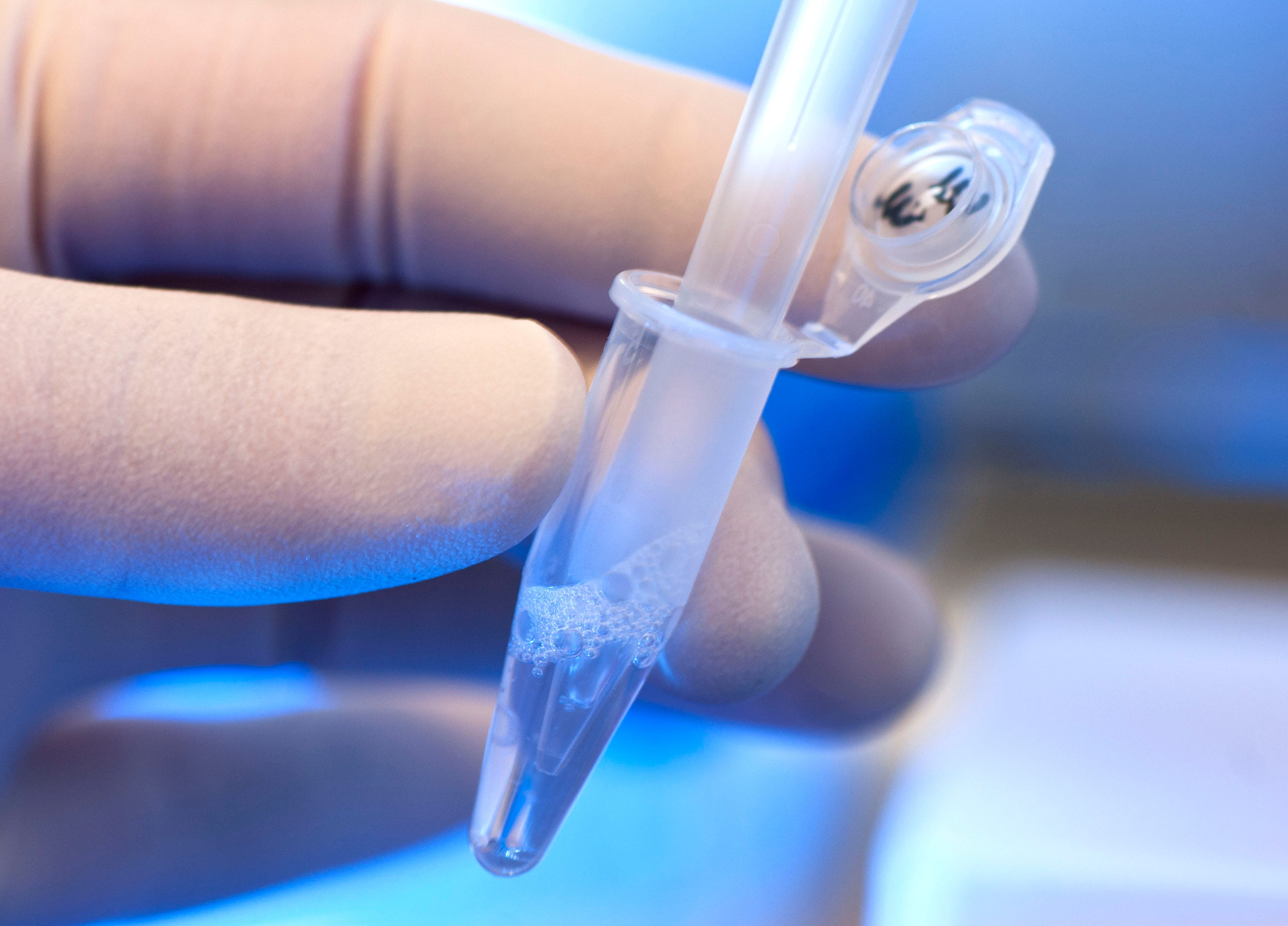
In the laboratory, the first step is to extract the DNA. The leaf is ground into a fine powder and then treated with various solutions and filters to progressively remove all the other cellular components. At the end of the process, only a small volume of liquid containing almost pure DNA remains.
At this point, it would be possible to read the entire genome—that is, all the billions of “letters” that make up its genetic information. This was first achieved for Pinot Noir in 2007, at a cost of nearly €23 million. Today, the same analysis costs around €500. However, when the goal is simply to identify a grape variety, there is a much simpler, faster, and perfectly adequate method.
This method relies on SSRs (Simple Sequence Repeats), also known as microsatellites. These are short regions of DNA where the four bases that make up the genetic code—A, T, C, and G—are repeated over and over again, almost as if the DNA were stuttering: GAGAGAGAGAGA... We still do not know exactly what these repeated sequences do—perhaps they play a role in regulating gene expression—but they have one extremely useful property: they are virtually identical in all individuals of the same grape variety while differing from one variety to another.
Using PCR, a technique that became widely known during the Covid-19 pandemic, these regions are copied millions of times so they can be measured accurately with a fluorescent detector. For each microsatellite, two values are obtained because grapevines, like humans, have two copies of each chromosome—one inherited from each parent.
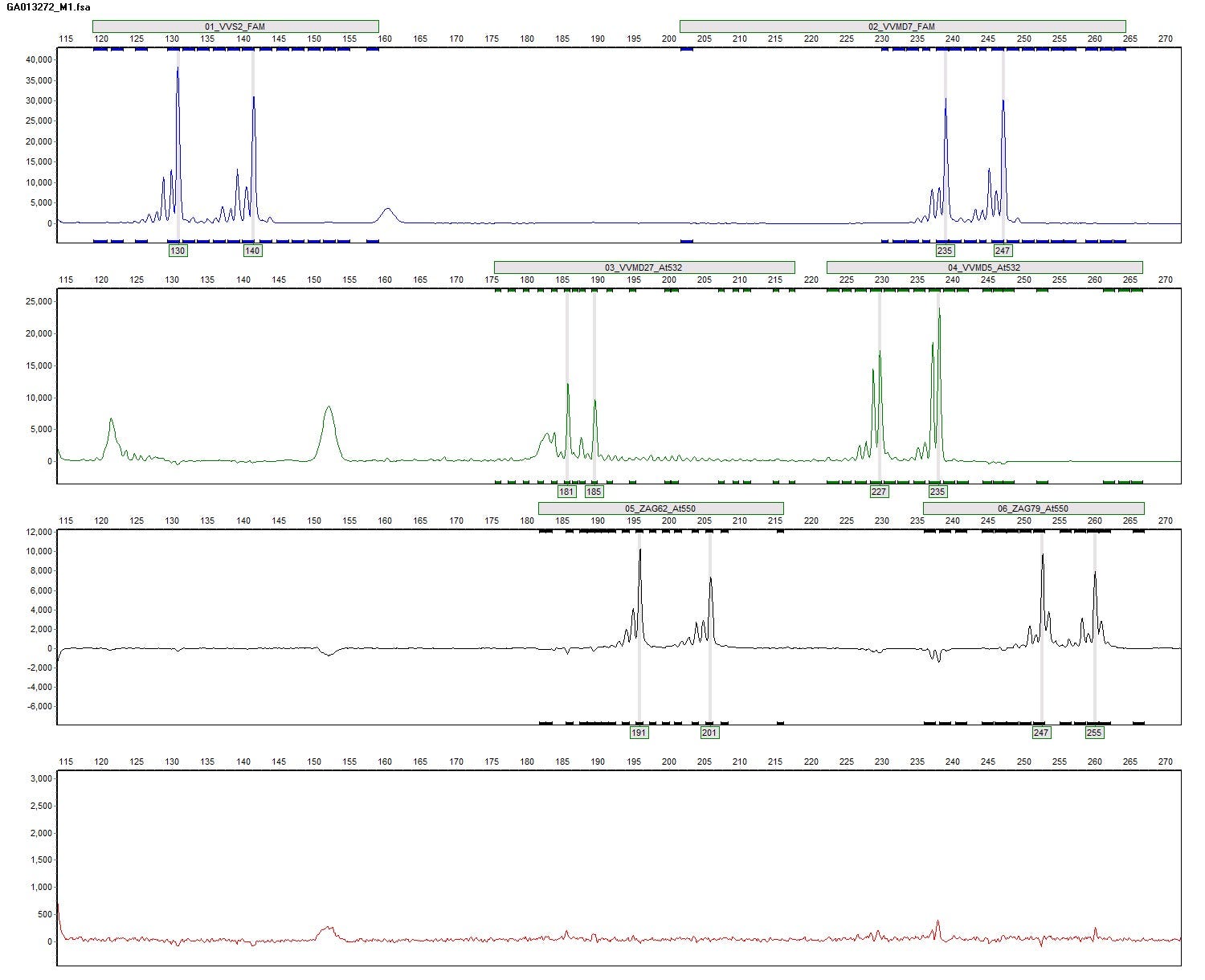
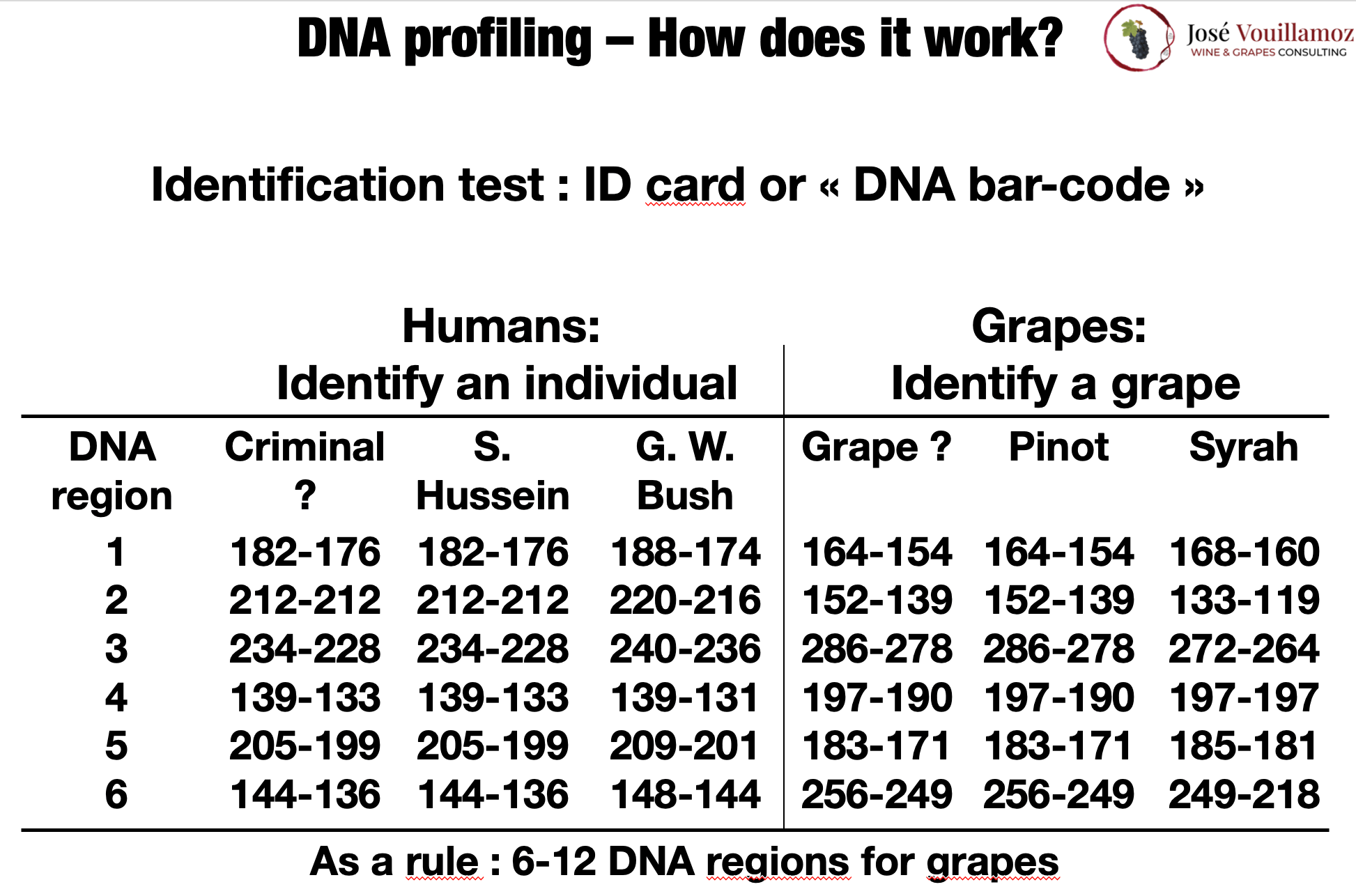
Of course, a single microsatellite is not enough to identify a variety. However, by analysing around a dozen of these genetic markers, we obtain a combination of values that is virtually unique: the grapevine’s DNA profile, its true genetic fingerprint.
But a DNA profile is only useful if it can be compared with others. This is where the database comes in. The more grapevine profiles it contains from around the world, the greater the chances of finding a match. It is a bit like Tinder for grape varieties...
I first learned this technique in 2001 during my postdoctoral fellowship in Professor Carole Meredith’s laboratory at the University of California, Davis. At the time, I was analysing grapevine samples collected along the Dalmatian coast. A few weeks later, this work would help demonstrate that California’s famous Zinfandel was in fact the Croatian variety Tribidrag. Without realising it, I was taking my first steps on what would become the defining thread of my entire career.
If you have an old grapevine, an unidentified variety, or simply a grape-related mystery you'd like to solve, I offer DNA profiling and parentage analysis through my consulting practice. More information is available at www.josevouillamoz.com.
Dr José Vouillamoz
The Grape DNA Detective
I thought I was an avid horticulture until I read your article. So much to learn in the plant world, when you think you know it all which tonight you showed me I don’t.
So Jose, why is taking a small leaf better for analyzing DNA than taking a berry (minus the seeds?